









 Shop all Blood Pressure


Cholesterol is usually framed as a concern for people in their 50s and 60s — something that surfaces after a lab result, often alongside a recommendation to "watch it." But cardiologists say the window for building a proactive cholesterol strategy opens much earlier than most people realize.
"All of us need to be concerned about cholesterol levels and cholesterol profiles well before we get into our 50s and 60s," says Dr. Christopher Davis, a triple board-certified cardiologist. "We should be aware of what our cholesterol profile looks like in our 20s and 30s."
This isn't alarmism. It's a shift in timing — from reactive to proactive.
Cholesterol is a biological process at every age
Your body produces cholesterol continuously, throughout your entire life. It's essential — needed for cell membrane function, hormone production, vitamin D synthesis, and more. Internal cholesterol production is not something that begins at 50. It's happening right now, at whatever age you're reading this.
Research shows that roughly 80% of the cholesterol in your body is produced internally — a normal biological function that occurs regardless of your age or diet.¹ The other approximately 20% is influenced by dietary intake.¹
What changes with age is how your body's cholesterol picture is influenced by other factors — hormonal shifts, metabolic changes, accumulating lifestyle patterns. The earlier you build a strategy that accounts for the full biology, the more ahead of the curve you are.
What cardiologists are seeing in younger patients
The population paying attention to cholesterol health is getting younger. "I'm seeing more and more people in their 40s and even their 30s starting to prioritize their cholesterol health," Dr. Davis says. This isn't driven by diagnosis — it's driven by awareness and a shift toward proactive health management.
The adults most likely to have a meaningful cholesterol strategy in their 50s and 60s are often the ones who started paying attention earlier — before a number became a concern.
Building a targeted strategy — at any age
A targeted daily cholesterol strategy at any age starts with the same foundation: a whole-food diet, regular physical activity, limited alcohol, and awareness of your individual biological factors.
But the five factors that influence cholesterol — diet, physical activity, hormones, alcohol, and internal biological processes — don't all respond to lifestyle choices equally. The internal biology piece is where a targeted supplement strategy can play a role, for those who want to go further than lifestyle alone.
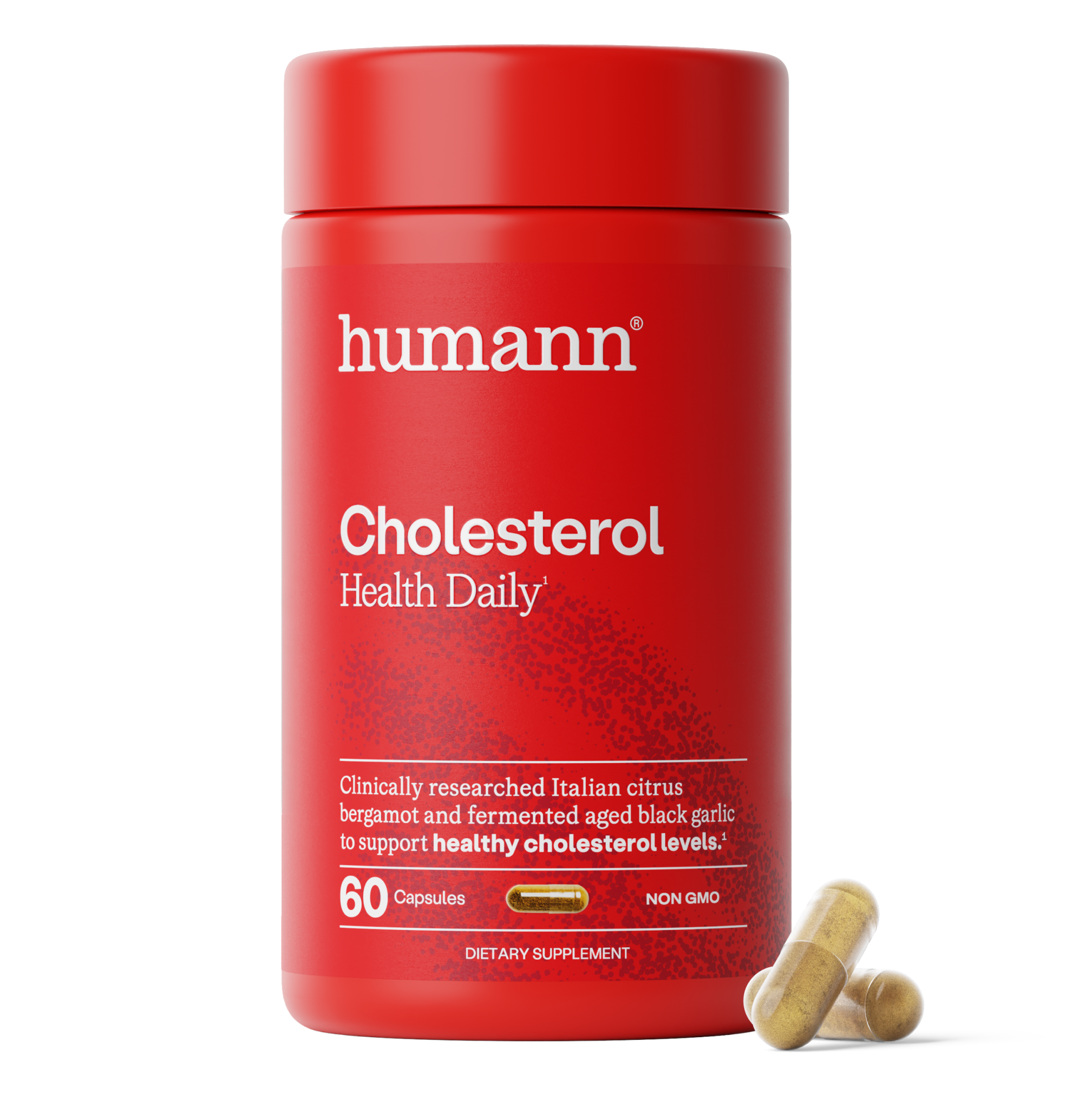
Research has identified specific plant-based compounds with clinical evidence behind their role in supporting healthy cholesterol levels. Aged black garlic extract — rich in S-Allylcysteine (SAC) — has been studied in a double-blind, placebo-controlled trial and shown to support healthy HDL levels, healthy overall cholesterol levels, and healthy triglyceride levels.² Italian citrus bergamot extract, sourced from Calabria and backed by two clinical studies, has been studied for its role in healthy cholesterol and lipid metabolism support.³
A proactive strategy isn't about having a problem to solve. It's about building a foundation before one develops.
¹Corliss, J. "How It's Made: Cholesterol Production in Your Body." Harvard Health Publishing, Harvard Medical School. health.harvard.edu ²Nirvanashetty S. Journal of Complementary and Alternative Medicine. 2023;6(1). ³Toth PP, Patti AM, Nikolic D, et al. Frontiers in Pharmacology. 2016;6:299.